Meaning
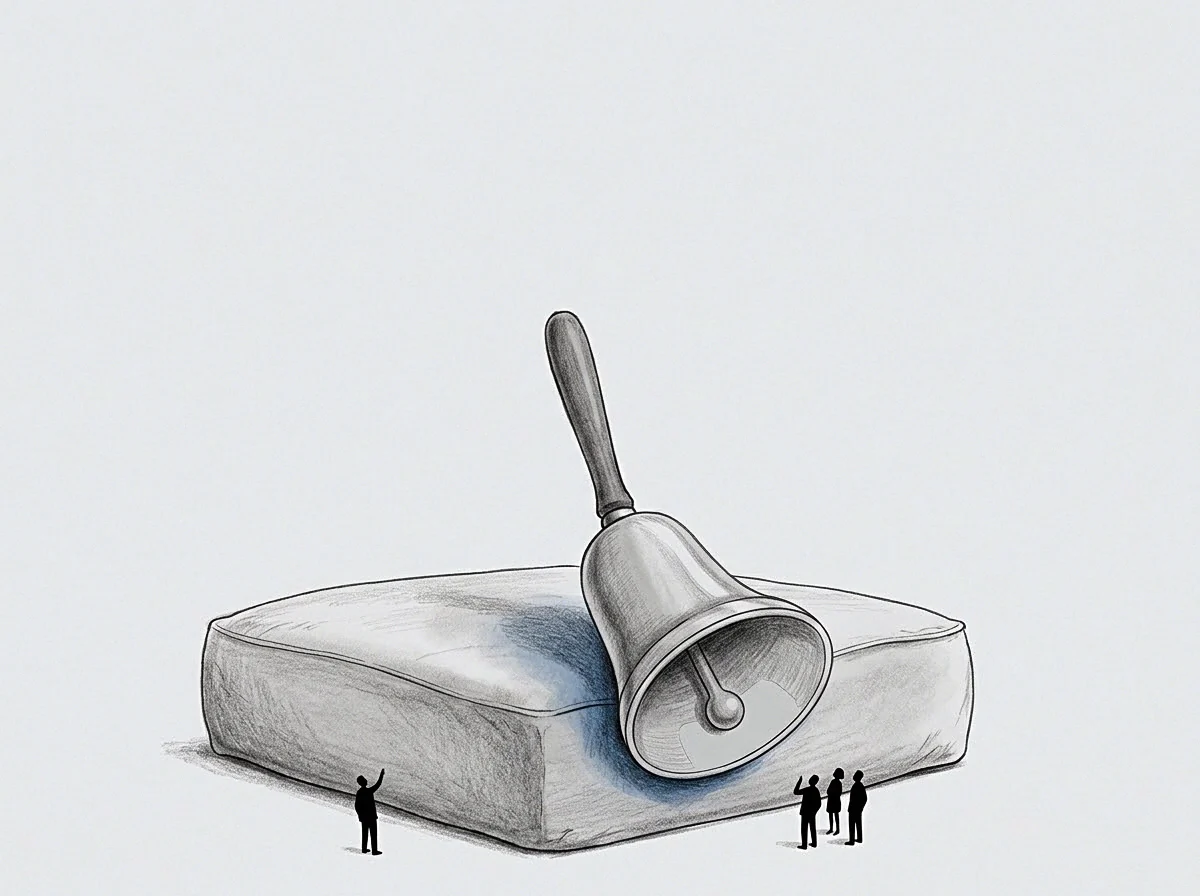
Behavioral decay curves illustrate the rate at which human operational compliance degrades as the administrative, cognitive or physical exertion required to sustain a protocol increases. This dynamic, characterized by the effort conservation slope, defines the mathematical and human boundary where adherence to formal processes yields to least-resistance workarounds. The slope maps the gradient between zero-friction default actions and high-friction prescribed standards.
It ceases to apply in environments where failure to complete a protocol results in instantaneous, physically enforced operational termination.
Frictional Resistance
Human operators naturally search for operational routes that optimize their output while minimizing immediate personal exertion. The effort conservation slope establishes the exact gradient along which compliance begins to drop off sharply. As an organization introduces additional verification steps, input fields or procedural checkpoints, execution fidelity falls predictably.
This drop-off is rarely an act of open defiance. Rather, it represents an efficiency response to administrative friction that produces diminishing subjective value for the operator.
Process Failure
Systems designed around the assumption of perfect human compliance invariably malfunction in live environments. When the effort conservation slope is steep, minor additions of procedural friction produce disproportionate collapse in protocol execution. Operators quietly abandon peripheral fields, omit secondary sign-offs or copy historical records to satisfy form validations.
The integrity of enterprise records degrades at the point where friction crosses this behavioral line. Sustainable process architecture actively accommodates this human optimization boundary.
Equilibrium Calibration
Effective operational engineering aligns compliance paths with the path of least mechanical resistance. Flattening the effort conservation slope involves eliminating unnecessary transactional steps, minimizing user interactions and integrating validations directly into primary workflows. Friction must never exceed the perceived utility of the target outcome.
When operational mechanics match human energetic tendencies, standard procedures survive without constant external enforcement. Process stability requires continuous monitoring of operational resistance along critical delivery loops.