Meaning
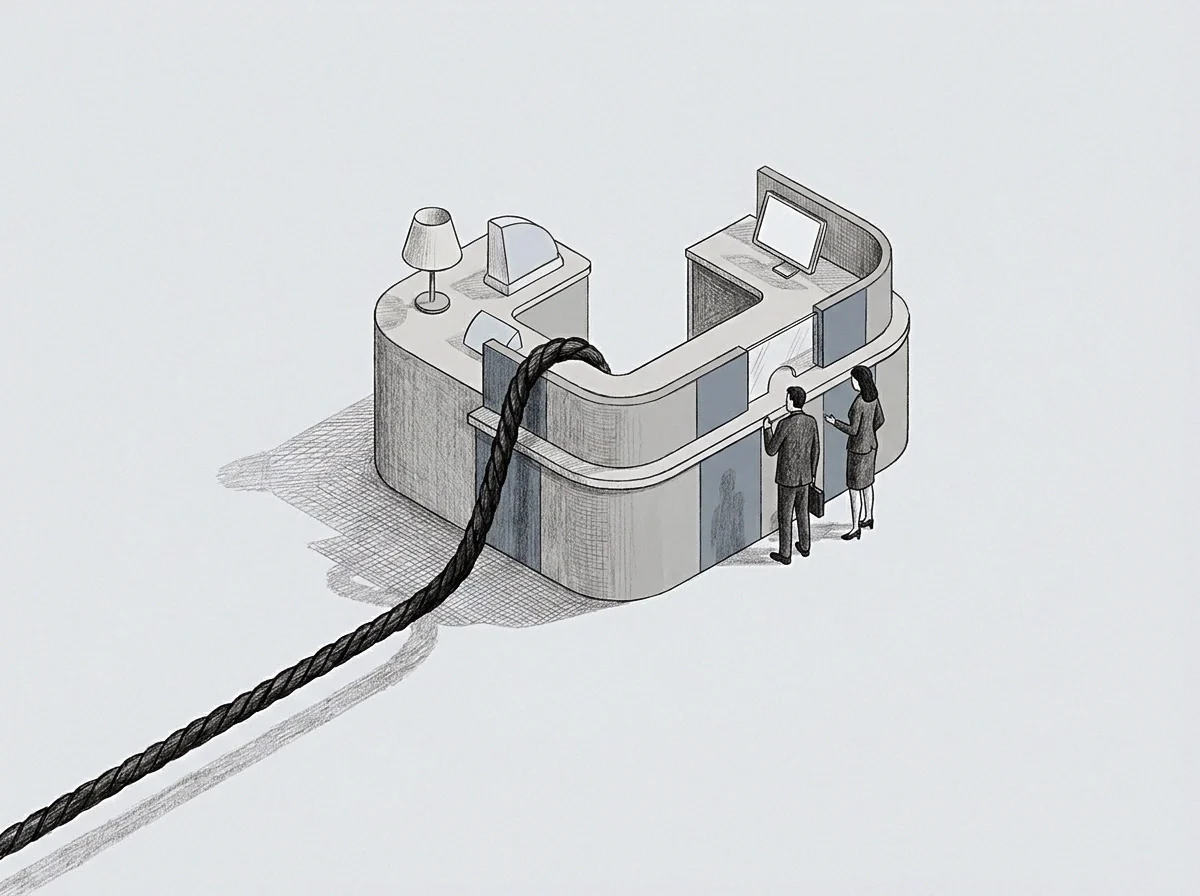
Financial leakage occurs when a professional service agreement expands beyond its initial scope without a proportional adjustment to the compensation structure. Retainer creep represents an incremental accumulation of duties assigned to a consultant or agency that exceeds the parameters of the original contract. This expansion consumes operational capacity while the underlying fee remains static.
The condition creates a delta between the labor hours consumed and the value realized by the provider.
Scope Expansion
Growth in service demands frequently happens through minor requests that appear negligible in isolation. A client might ask for additional reporting cycles or extra attendance at weekly operational meetings. These tasks require energy and time that the current budget does not cover.
Over several months, the cumulative requirement transforms a high-margin agreement into a loss-making obligation. Monitoring the drift between requested output and authorized billable hours prevents this internal erosion.
Contract Alignment
Formal documentation governs the boundaries of professional engagements by tying specific deliverables to fixed payments. An agreement that lacks a clear procedure for amending the work plan fails to protect the provider from mission drift. Modifications to the project mandate require a documented trigger that forces a review of the payment terms.
Clear protocols regarding out-of-scope requests force stakeholders to acknowledge the economic impact of added labor. Such documentation aligns resource allocation with the capacity constraints of the provider.
Value Gradient
Measurement of this phenomenon relies on the variance between the projected effort and the actual hours expended on non-contracted tasks. A cardinal count of total hours provides the base figure for determining the efficiency of the engagement. The gradient between the planned output and the realized output acts as an indicator of service degradation.
A negative variance warns the provider that the work relationship consumes more capacity than the revenue justifies. This metric facilitates a decision regarding either the reduction of scope or the renegotiation of the fee structure.