Meaning
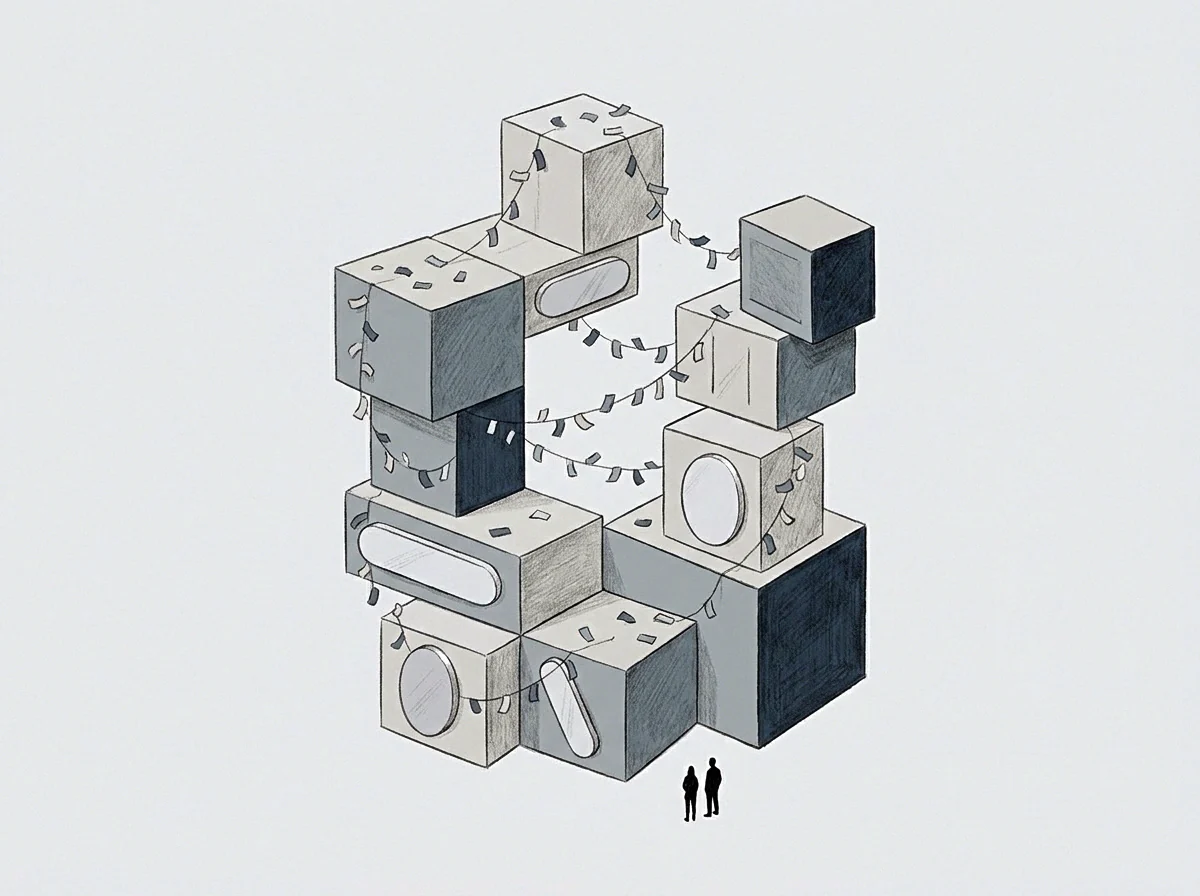
Systemic separation involves the intentional removal of direct dependencies between internal components or organizational units. Architects and managers use structural decoupling to ensure that a failure or change in one part of the system does not cause a cascade across the whole. This state is achieved when the interface between parts is standardized and minimal.
Independence Mechanism
Modular design allows different teams to work on separate pieces of a project at their own speed. Through structural decoupling, the organization avoids the bottlenecks that occur when one department must wait for another to finish a task. This independence is often managed through the use of clear protocols or digital interfaces that act as the only point of contact.
The internal logic of each module remains hidden from the others.
Operational Autonomy
Units that are decoupled can adapt to local challenges without needing approval from the central authority. This structural decoupling promotes faster decision making and innovation because the impact of a local change is contained within the unit. It also makes the entire organization more resilient to external shocks.
If one branch of the company faces a disruption, the others can continue to function normally.
Connectivity Limit
Efficiency gains from separation are lost if the modules cannot eventually work together. While structural decoupling reduces friction, it requires a robust set of rules for how the different parts will eventually integrate. The boundary where these parts meet must be carefully designed to prevent new dependencies from forming.
Over time, the goal is to keep the connections as thin as possible while maintaining the overall integrity of the business.