Meaning
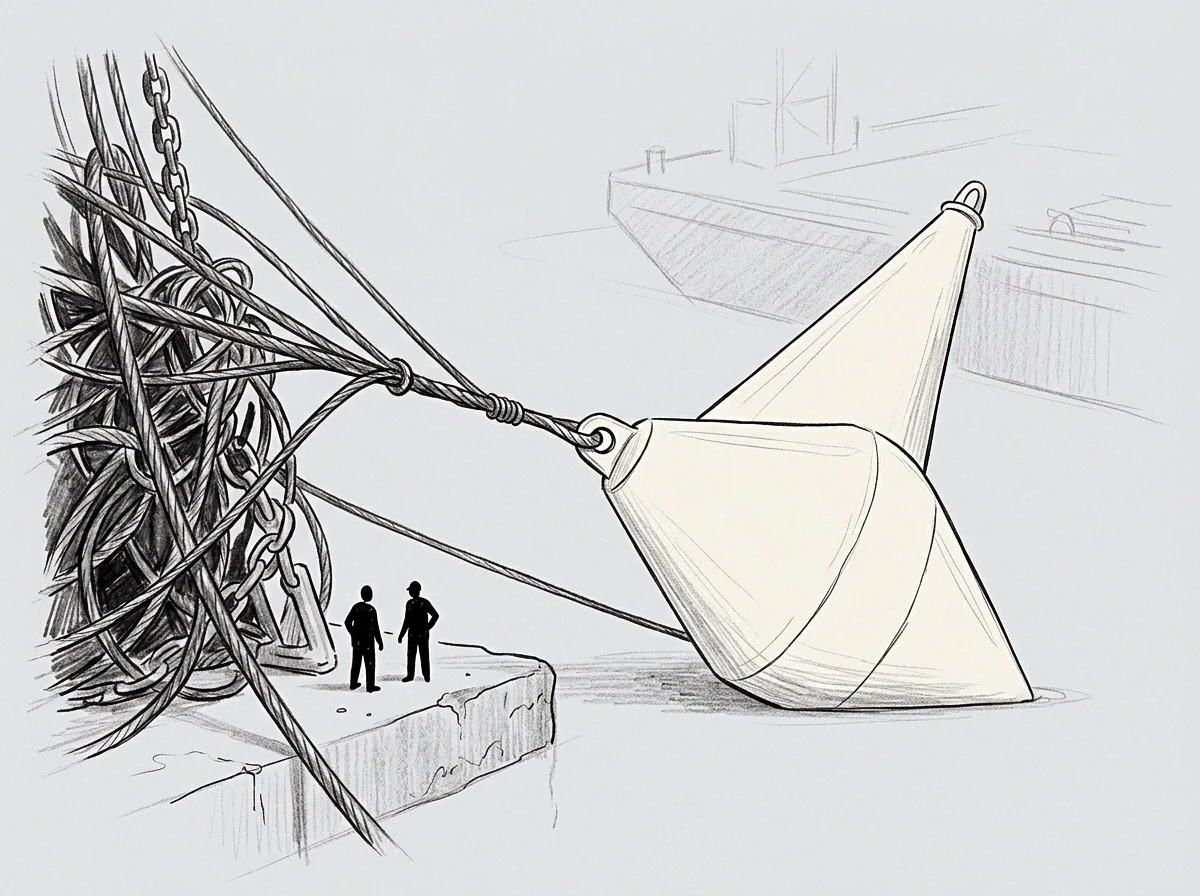
Progressive leakage of productive operational energy through institutional friction defines the cumulative loss of momentum within an enterprise system. Across organizational mechanics, systemic dissipation quantifies the cardinal variance between total input energy, measured in human capital and deployed funding, and the actual utility realized in external market results. The boundary of the concept ends where energy loss is attributable to identifiable project termination, explicit market failure, or deliberate capital expenditure.
Friction Gradients
Organizational complexity acts as an entropy generator across daily operations. Every additional approval gate, ambiguous mandate, and duplicated verification protocol converts decisive operational momentum into inert process compliance, driving continuous systemic dissipation. The energy slips away into bureaucratic maintenance routines rather than strategic execution.
Small structural inefficiencies aggregate into massive organizational inertia over time. Forward progress slows to an imperceptible drift.
Diagnostic Indicators
Identifying passive energy loss requires measuring structural resistance across operational workflows. Indicators of systemic dissipation include prolonged cycle times for elementary decisions, mounting volume of internal status memos, and consistent erosion of execution cadence across successive quarters. Four operational domains routinely harbor high friction, namely legal clearances, procurement pipelines, cross-functional sign-offs, and multi-tier budget approvals.
The decay operates as a quiet tax on organizational stamina.
Frictional Reduction
Sustaining strategic velocity requires continuous elimination of structural drag across core operational pathways. Remedying systemic dissipation demands deliberate pruning of obsolete procedural checkpoints and the aggressive decentralization of execution authorities. Removing redundant governance structures directly restores operational efficiency.
An enterprise preserves momentum by systematically minimizing internal mechanical resistance.