
Mapping Operational Routing Friction Across Internal Workflows
Internal workflow friction occurs when tasks route around ill-defined decision boundaries, accumulating unprocessed material along the path of least resistance.
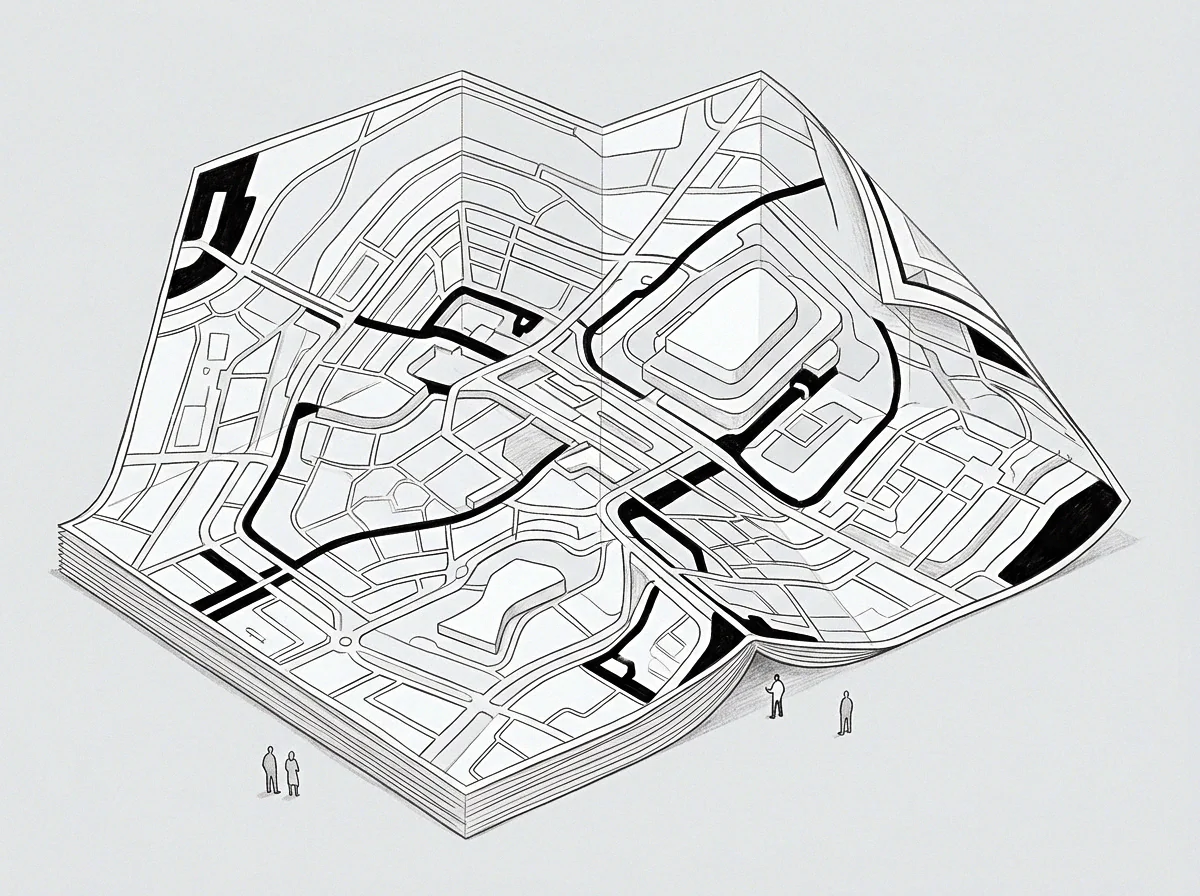
Artery
An engineering ticket requesting modifications to an core database schema sits in a review queue for eleven business days across three handoffs while minor documentation updates clear in twenty minutes. The technical complexity of the schema change is modest, requiring forty lines of code, yet the item recirculates continuously between software architects, database administrators, and platform security leads. No individual reviewer rejects the submission outright.
Each role adds a technical caveat, requests an additional benchmark, and forwards the item to an adjacent functional domain. The work item encounters routing friction, an administrative resistance that manifests when internal operational pathways deflect tasks away from decision boundaries toward areas of lower accountability.
Friction leaves a trace. Operational pipelines operate under implicit incentives that encourage individual contributors and middle management to minimize personal error exposure. When an internal process lacks sharp authority boundaries, tasks carrying reputational or operational risk migrate toward informal hold states.
The path taken by a task through an organization rarely reflects the shortest sequence of execution steps. Instead, the task follows a trajectory determined by the operational gradient, descending toward local minima where administrative friction is lowest and defensive documentation is highest. The duration a work item spends in transit measures the structural ambiguity of the organization rather than the intrinsic labor required for execution.
A task delayed four times across two teams reveals where responsibility becomes ambiguous.
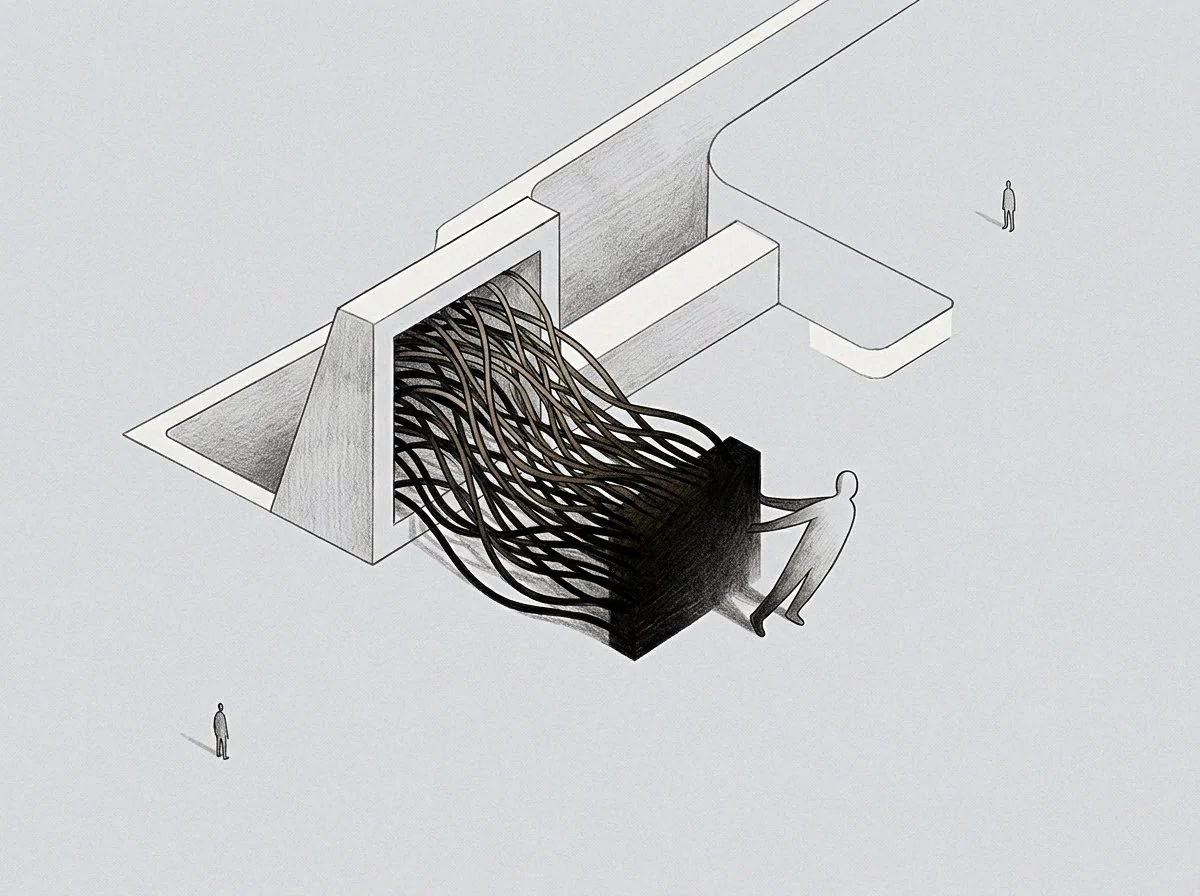
The Anatomy of Lateral Deflection
Internal task paths naturally bend away from high-stakes decisions. When an operational request demands an definitive choice under uncertainty, the request experiences lateral deflection. Lateral deflection occurs when an employee shifts a work item to a peer or an adjacent department under the guise of consultation, peer review, or cross-functional alignment.
The primary metric of lateral deflection is the ratio of active processing time to queue retention time. In optimized workflows, active labor constitutes the majority of total elapsed duration. In workflows plagued by routing friction, queue retention consumes over ninety percent of the lifespan of a work item.
Consider the structural differences between direct routing and deflected routing across administrative boundaries. Direct handoffs establish singular ownership, whereas deflected handoffs distribute operational liability across multiple passive observers.
| Operational Attribute | Consensus-Driven Escalation | Boundary-Gated Handoff |
|---|---|---|
| Primary Path Determinant | Risk minimization and broad alignment | Explicit functional threshold verification |
| Queue Retention Ratio | High (85% to 95% total duration idle) | Low (10% to 25% total duration idle) |
| Accountability Distribution | Diffused across reviewing committee | Concentrated in active processing role |
| Error Signal Location | Hidden in prolonged consultation delays | Exposed immediately at rejection gate |
The review stalls here. The data demonstrates that consensus-driven models introduce massive procedural drag without decreasing technical failure rates. The accumulation of passive witnesses on a workflow channel creates a false sense of risk mitigation while exponentially increasing execution latency.

Structural Resistance Point Identification
Every handoff introduces a potential delay point where work sits unassigned. Structural resistance points emerge at the intersection of conflicting departmental incentives. A product management team prioritizes velocity of feature release, whereas a compliance team prioritizes absolute adherence to regulatory standards.
When a work item moves between these two domains without explicit acceptance criteria, the item encounters an administrative wall. The work item does not fail; it stalls. The system absorbs the drag.
Mapping these friction points requires tracking the physical path of work orders through ticketing platforms, communication software, and approval matrices. The accumulated delay at any given node signals the presence of unprocessed operational risk. Avoidance marks the edge.
Organizations that fail to identify these coordinates continue to add supervisory layers, which amplifies the routing friction they seek to eliminate. A clear governance rule that binds the receiving party to accept or reject a submission within two hours alters the slope of the entire operational pathway.
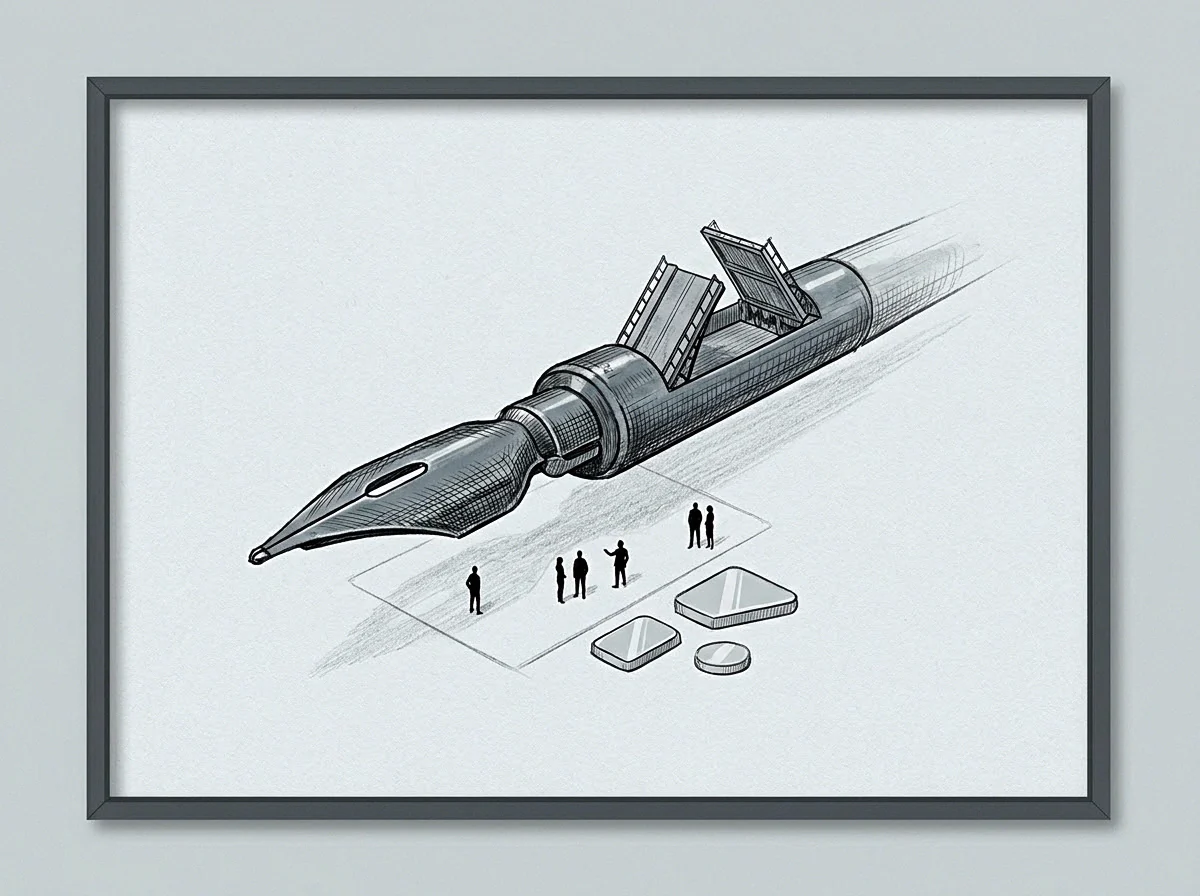
Vector
Movement across an operational pipeline follows the path of least resistance. When an employee encounters a task containing ambiguous requirements or elevated personal risk, the operational vector shifts away from execution toward administrative deferral. The worker routes the item to a secondary channel where accountability is lower.
This movement generates a measurable friction vector, defined by the spatial and temporal divergence between the optimal execution path and the actual path taken by the task.
Work settles at the floor. Operational routing friction operates as a derived measure calculated from the variance in velocity across different workflow segments. High-friction vectors indicate internal structural breakdown long before project deadlines are missed.
When routine authorizations require multi-departmental sign-offs, employees adapt by seeking alternative informal routes or by padding delivery timelines to accommodate administrative latency.

Path of Least Cognitive Drag
Individual contributors re-route ambiguous work items toward peripheral teams. This pattern represents the path of least cognitive drag. Modern workplaces present employees with competing demands for attention and effort.
Tasks with precise evaluation criteria and low risk are prioritized because they yield immediate validation with minimal effort. Tasks carrying unclear scope or systemic liability are deferred, reassigned, or subjected to excessive peer review.
The queue holds. The systematic avoidance of high-friction tasks leads to latent operational bottlenecks. The organization accumulates unprocessed operational material in specific intermediate queues.
Over time, these queues become organizational dumping grounds for unresolved strategic ambiguities.
- Silent Rejection work is returned to the queue without explicit operational rationale or actionable feedback for the sender.
- Serial Escalation requests pass through unnecessary decision tiers to share accountability across multiple leadership layers.
- Scope Fragmentation complex items split into smaller low-friction approvals that bypass primary administrative scrutiny entirely.
Operational friction increases in proportion to the number of non-signatory witnesses present on a review chain.

When Does Deferred Approval Turn Into Structural Avoidance?
A temporary hold on a task turns into systemic blockage when review criteria remain unstated. When an approver lacks clear guidelines for evaluating a request, the default action is delay. The request remains in an open state while the approver awaits external clarity or shifts focus to less demanding queue items.
Silence carries an operational charge. The sender interprets the lack of action as implicit rejection or low priority, leading to secondary pinging cycles that consume additional bandwidth across communication channels.
The handoff takes three days. The resulting operational load expands beyond the original task. The system generates secondary administrative artifacts: status updates, escalation emails, alignment meetings, and friction reports.
The team lead receives the summary and notes that the vendor contract is still awaiting legal validation because legal is waiting for security to sign off on the data retention schedule.

Slope
A baseline operational rate measures the speed of work across clear, unobstructed pathways. When administrative friction is introduced, the workflow slope degrades, slowing execution velocity. The steepness of this degradation corresponds to the amount of unprocessed organizational friction present within the operational model.
Mapping this slope allows system design leads to pinpoint exact locations where procedural drag overrides worker output.
Every delay costs capacity. The structural slope is rarely uniform. Workflows may run smoothly through initial design and development phases only to hit an extreme vertical incline during legal, security, or executive reviews.
These localized spikes in resistance force teams to exert massive energy to move simple deliverables across project lines.
An unstated operational boundary creates localized workarounds that become permanent procedural overhead.

Unprocessed Material Above the Baseline
Tasks that encounter ambiguous governance accumulate in holding states. This unprocessed material sits above the baseline capacity of the organization, representing unspent latent operational volume. The volume consists of unresolved decisions, unallocated resources, unapproved architectural changes, and unratified strategic directions.
The presence of this material forces employees to construct manual workarounds to maintain daily operations.
The work rests in queue. Workarounds create shadow workflows that bypass standard governance entirely. While shadow processes temporarily sustain output velocity, they generate significant long-term systemic debt.
Shadow processes operate without central visibility, creating security vulnerabilities, data duplication, and inconsistent operational execution across parallel business units.

Accumulation Patterns in Latent Workflows
Take two operational groups managing software deployment across parallel infrastructure stacks. The first group operates under strict, explicit boundary definitions: every infrastructure change requires a standardized automated test suite to pass before instant deployment. The second group operates under informal peer review: deployment requests are submitted via chat channels and require manual verification from a senior engineer who also holds responsibility for core feature development.
Assume the senior engineer spends thirty percent of daily capacity on unplanned review requests while managing a high-priority feature delivery.
Under these conditions, the second group experiences severe routing friction. The senior engineer, facing competing priorities, defers code reviews until the end of the work day or batches them into multi-day review sessions. Developer pull requests sit idle for an average of forty-eight hours.
Developers, seeking to maintain their individual velocity metrics, begin bundling multiple unrelated code modifications into single massive pull requests to minimize the number of review cycles. The increased size of each submission elevates code complexity, rendering manual review significantly more difficult and error-prone.
The administrative latency increases exponentially. What began as an informal review preference devolves into a structural bottleneck that degrades deployment frequency from five times daily to once every two weeks. When an organization attempts to solve this velocity drop by introducing a release coordination manager without addressing the underlying review boundary, the release coordination manager adds another layer of status tracking, increasing total execution drag.
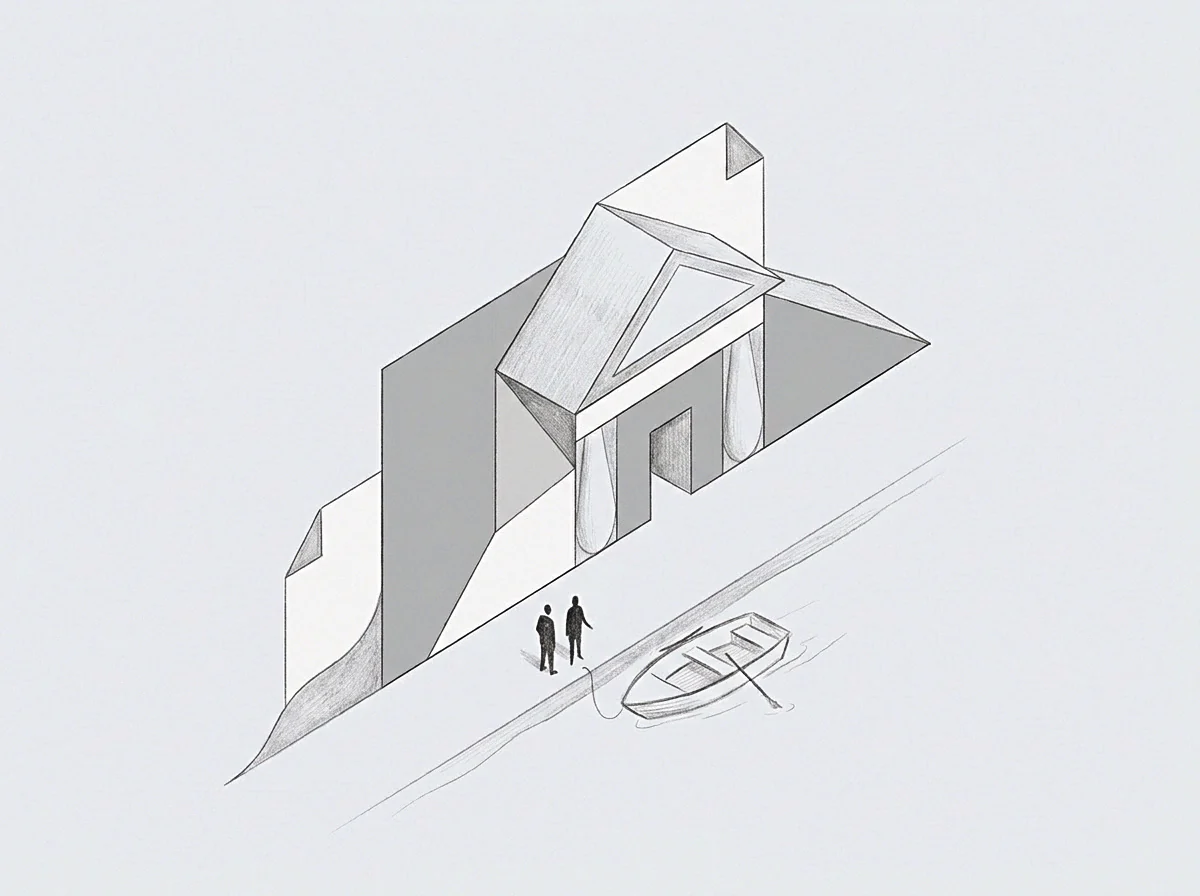
Cost
Measuring administrative drag involves tracking time lost during handoffs between operational domains. The true cost of internal workflow friction is ordinal rather than cardinal, manifesting as lost organizational capacity, degraded worker morale, and delayed market entry. Financial price tags capture direct labor expenditures, but they fail to account for the opportunity cost of capacity consumed by administrative navigation.
Friction reveals the structural limit. When bright engineering or operational talent spends twenty percent of weekly working hours chasing sign-offs across ill-defined departmental matrices, the operational capacity of the firm is permanently reduced. The organization pays full price for technical expertise while utilizing that expertise for administrative bureaucracy.
The seat holding final approval bears the administrative load of setting explicit criteria.

Measuring the Drag of Covert Contracts
Unspoken expectations between team leads generate persistent administrative friction. A covert contract exists when one operational group expects another to adhere to unstated standards, formatting guidelines, or review protocols before work is accepted. When a submission fails to meet these unspoken criteria, the receiving party does not offer clear corrective guidance; instead, they deprioritize the request or return it with vague notes demanding improvement.
The boundary stops the motion. The sending group attempts to guess the implicit standards of the receiving group, leading to repeated cycles of sub-optimal revisions. This loop consumes operational hours while fostering interpersonal friction between functional silos.
Formalizing explicit handoff contracts eliminates covert contracts by defining exactly what constitutes a complete and acceptable work package.
- Baseline Triage map every handoff point where execution duration exceeds active processing time by fivefold.
- Friction Quantification calculate the hours spent in administrative holding states against actual computational or manual labor.
- Boundary Formalization establish explicit handoff criteria that reject ambiguous transfers before work enters the queue.

Boundary Mapping at the Operational Edge
Mapping system thresholds reveals where teams stop processing requests directly. The operational edge represents the boundary beyond which a team refuses to accept liability for execution outcomes. When an organizational process pushes a task beyond this edge without adequate contextual transfer, the task drops into an operational void.
The capacity vanishes silently. Identifying these operational edges requires continuous monitoring of task handoffs and queue lengths. Managers must map the workflow surface to identify where operational slope changes from smooth progression to high-friction drag.
Eliminating drag requires redrawing operational boundaries to align authority directly with execution capability.
The team that establishes unambiguous handoff criteria reduces its queue retention time to zero while forcing adjacent departments to standardise their submissions.

Gate
Realigning execution boundaries stops work items from circulating endlessly. Resolving internal routing friction requires structural intervention at the exact coordinates where handoffs occur. Systemic friction cannot be solved through employee motivation, culture campaigns, or productivity advice.
It requires hard procedural constraints that restrict task transfers to instances where explicit criteria are fully met.
The system absorbs the drag. Designing effective operational gates requires establishing hard acceptance thresholds at every functional transition point. A gate acts as a binary filter: work items meeting defined technical and administrative standards pass immediately into active execution, while non-compliant items are rejected instantly back to the originator with specific remediation requirements.

Handover Boundary Realignment
Clear explicit criteria at points of transfer eliminate ambiguous responsibility. When a task arrives at a functional boundary, the receiving system must instantly evaluate the submission against pre-defined rules. If the submission passes, ownership transfers completely, and the receiving party assumes full responsibility for downstream execution.
If the submission fails, it is returned immediately without entering an idle queue state.
Instant rejection at the boundary is far less costly than prolonged retention in an administrative queue. Instant rejection provides immediate feedback to the sender, allowing rapid correction of deficiencies. Idle queue retention conceals quality errors, creates administrative drag, and obscures true operational throughput metrics.
Resolution Mechanics for Internal Queues
Systematic friction reduction demands explicit protocol design for every queue. Organizations must audit their internal workflow topologies continuously to identify emerging structural resistance points. When a specific approval step consistently generates administrative latency, that step must be evaluated for structural elimination or automated execution.
Delegating sign-off authority to the lowest possible execution level removes unnecessary managerial nodes from the decision path. Automated policy validation tools can replace manual compliance checks for standard, low-risk requests. By clearing administrative obstruction from routine execution paths, organizations unlock latent operational capacity and restore execution velocity across all functional domains.
The structural geometry of internal routing determines organizational throughput, and adjusting that geometry requires changing the rules of transfer rather than urging workers to move faster.