Meaning
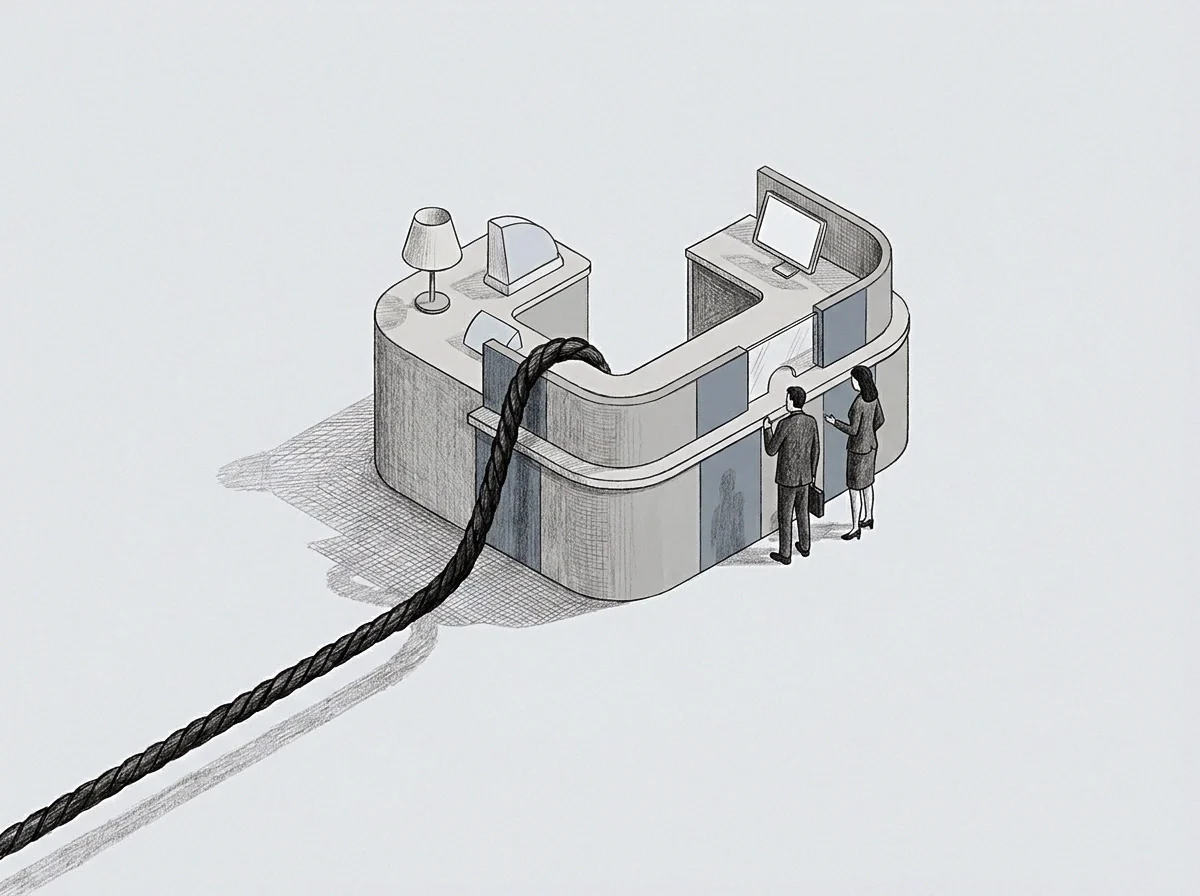
An operational metric represents the non-productive hours spent aligning stakeholders after the execution phase has commenced. This phenomenon, known as client coordination drag, arises from unscheduled reviews and repeated explanations of technical trade offs. The measurement captures the gap between planned execution time and actual time spent managing the relationship.
It stops applying once a project moves into formal maintenance where communication frequency is fixed by contract.
Friction Coefficient
Quantifying the disruption requires tracking the time spent on unscheduled calls and unrecorded correspondence. When these ad hoc interactions increase, client coordination drag escalates and reduces the weekly capacity of engineering teams. The coefficient fluctuates based on the number of client stakeholders involved in decisions.
A high frequency of shifts in requirements pushes the measurement above the historical baseline.
Resource Depletion
The attention budget of a founding team is finite, and excessive communication reduces the hour count available for product development. This depletion occurs as a gradient rather than a sudden drop. Founders often underestimate the cumulative cost of ten minute status updates because each event seems minor on its own.
Over a quarterly cycle, these interruptions coalesce into a measurable block of lost time. When developers must constantly explain their choices, their focus is interrupted and their output decreases. This pattern leads to extended timelines and higher delivery costs.
Recovery Boundary
Recovery of lost capacity begins with establishing a formal communication protocol. Teams can contain client coordination drag by routing all inquiries through a single structured channel. This boundary separates execution from relationship management and protects the development sprint.
Standardizing the frequency of reviews ensures that alignment occurs without draining operational energy.