

Did It Move And How A Person Would Know
Systemic movement is verified when an intervention produces a measurable delta against a recorded baseline across a defined window.
Systemic movement is verified when an intervention produces a measurable delta against a recorded baseline across a defined window.

Measuring operational movement in new environments depends on resetting historical baselines to local empirical reference points before reading directional delta.

Live systemic feedback exhibits output variance directly proportional to input changes, whereas static cached output signals remain structurally invariant.

Performance movement in unfamiliar contexts is measured by computing ordinal deltas against newly recorded local baselines rather than historical metrics.

Empirical reference classes establish objective base rates from comparable historical efforts to calibrate forecasts during unfamiliar market entry.

An invariant output returns static values across shifting inputs, masking predictive drift until evaluated against calibrated real world vectors.

Decoupling historical metrics requires isolating new expansion outposts into dedicated validation windows focused on localized operational velocity.

Bayesian calibration updates prior expectations by blending target domain historical base rates with newly observed feedback over structured measurement windows.

Decreasing resource allocations reduce absolute delta magnitude, requiring extended window durations to prevent ambient signal noise from obscuring true system movement.

Operational baseline movement is evaluated by comparing un-cached field telemetry against established historical benchmarks across defined observation windows.

Evaluating invariant output signals against calibrated vector baselines reveals whether operational telemetry reflects live computation or static cached retrievals.

Operational delays mask market demand by creating fulfillment backlogs that distort early reference comparisons against mature competitors.

System vulnerabilities emerge when high-throughput architectures swap live calculation for cached lookup lookups, hiding state drift behind invariant metrics.

Operational baseline calibration requires documenting local structural friction across fixed observation windows before adjusting internal execution setpoints.

Isolating regional operational metrics from domestic baselines requires dedicated tracking pipelines that prevent consolidated corporate averages from masking local friction.

Bayesian updating recalibrates optimistic domestic priors by blending observed early market signals with objective reference class base rates across defined windows.
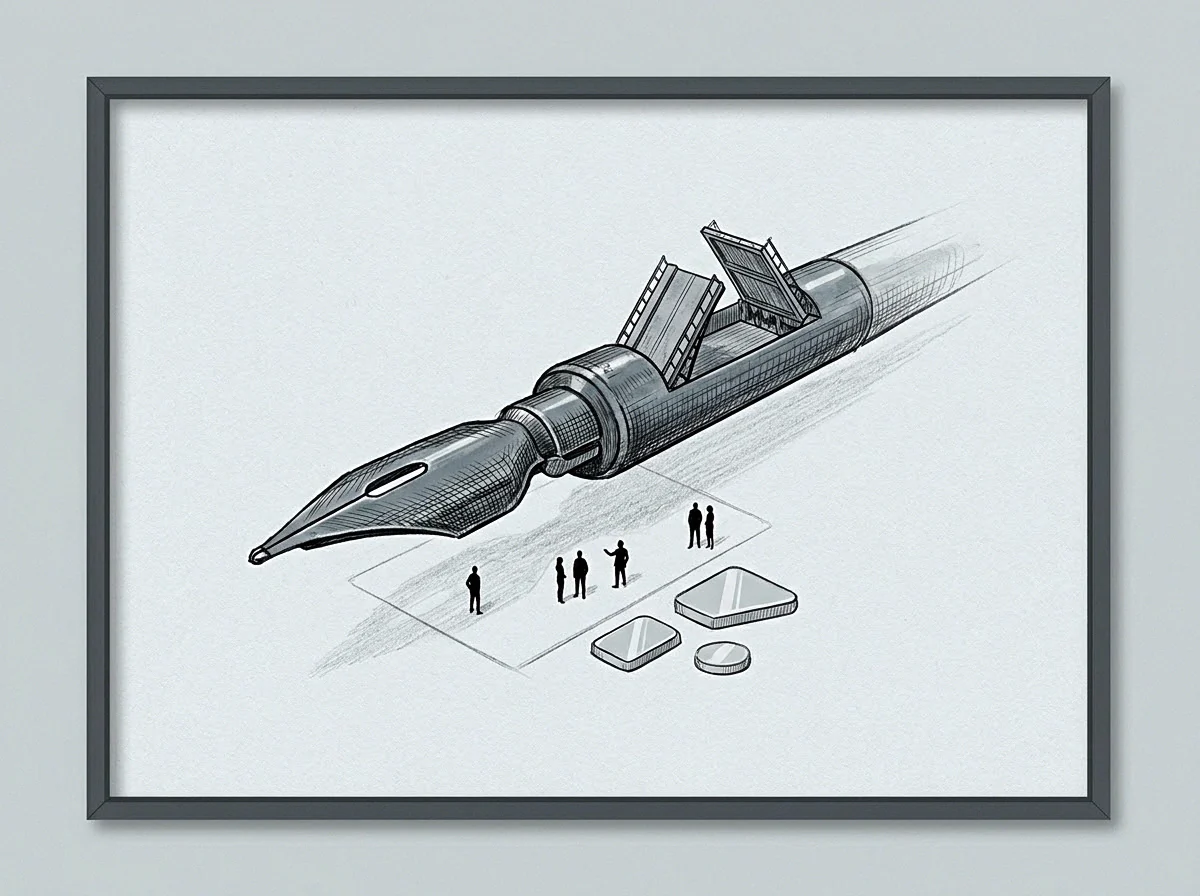
Quantifying reference class variance in opaque domains requires constructing proxy cohorts from structurally adjacent markets and applying dynamic delta updates.

Allocation decay shows structural yield decline under input perturbation, while background noise displays mean-reverting variance across defined observation windows.

Establishing fixed operational reference points across rolling execution windows prevents moving benchmarks from absorbing and disguising compounding drag.

Multi-axis vector delta analysis measures systemic structural drift by calculating angular displacement across orthogonal operational performance baselines.

Structural reference class breakdown is resolved by replacing historical distribution models with live rolling calibration windows and ordinal signal tracking.

Calibration lag measures the persistence of high-frequency belief structures after moving into low-velocity environments with long validation delays.

A strategic shift is confirmed when operational outputs move beyond two standard deviations of a recorded baseline over a fixed window.

Signal resolution drops when operators read performance deltas over windows shorter than the systemic lag of the underlying process.

Dynamic observation windows expand time horizons when declining resource inputs bring signal magnitude down to background environmental noise levels.

True directional baseline displacement alters physical resource constraints across multiple orthogonal axes while measurement noise remains localized to the recording pipeline.
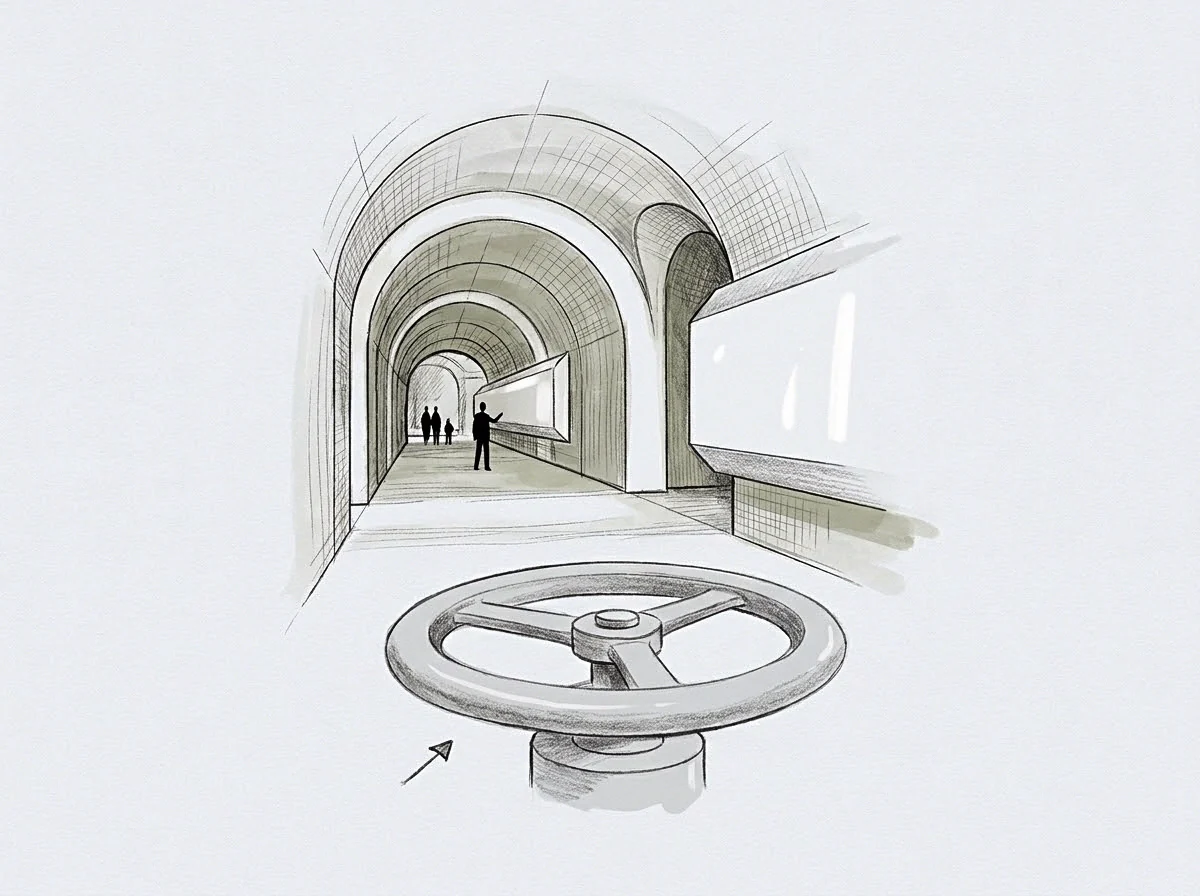
Calibrated telemetry baselines require bounded stationarity windows that isolate sensor drift from operational regime shifts through empirical validation.

Live operational signals change dynamically with changing parameter inputs, while cached retrieval returns static output despite altered system state.

Acquirers measure live operational variance against cached engineering benchmarks to replace static vendor metrics with real-time throughput decay calculations.

Adjusting expansion reference classes requires integrating local operational friction and feedback latency vectors into historical base rate models.
The terms are written where they belong. Each field holds three desks, and every entry a desk writes raises the terms it uses, each term given a meaning, a mechanism and the places it appears. The record on these pages stays first person and hand made; the fields grow the nomenclature.