

The Gradient Computed From Value And Carrying No Judgment
A gradient computed from value measures directional change along an established coordinate without introducing qualitative assessment or moral judgment.
A gradient computed from value measures directional change along an established coordinate without introducing qualitative assessment or moral judgment.

Systemic movement is verified when an intervention produces a measurable delta against a recorded baseline across a defined window.

An invariant output returns static values across shifting inputs, masking predictive drift until evaluated against calibrated real world vectors.

Resolving structural deflection requires isolating unmeasured friction vectors and anchoring primary metrics directly to derived operational baselines.
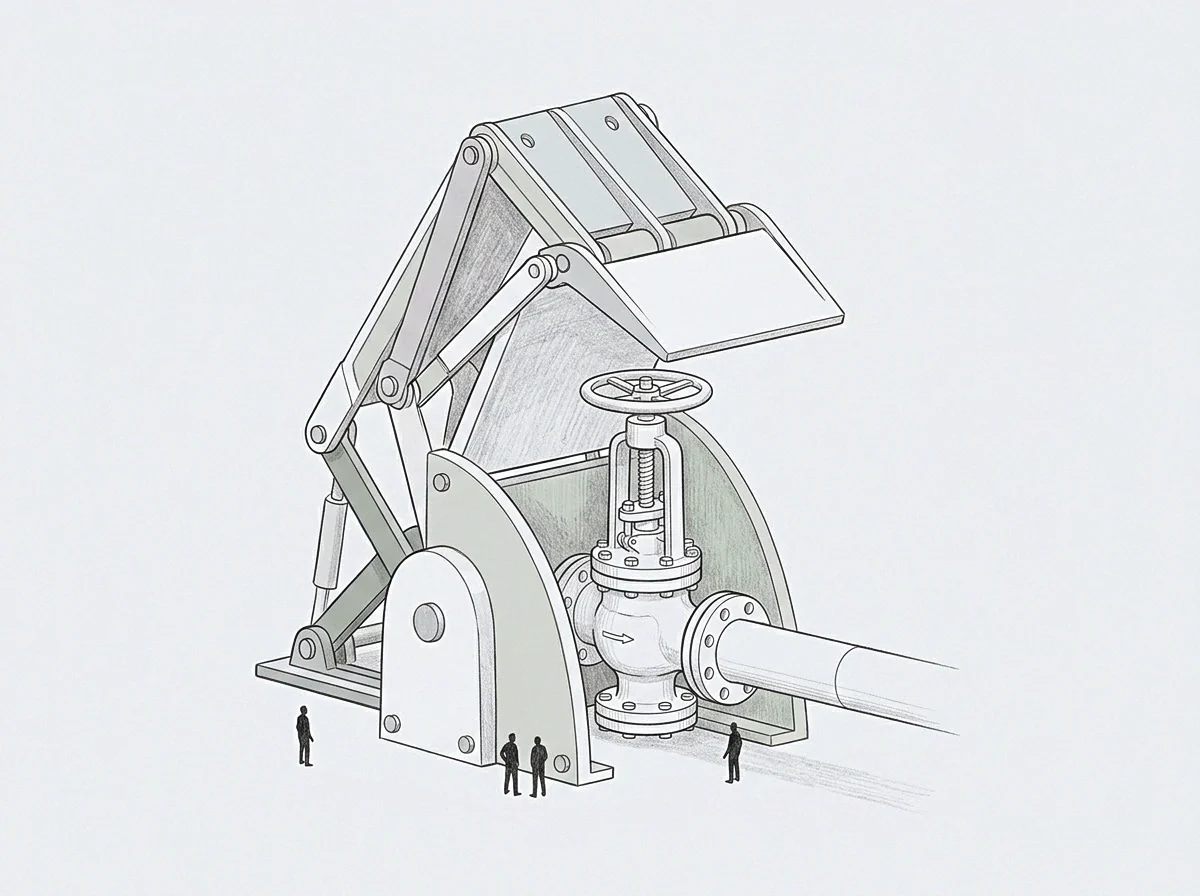
Establishing baseline metrics before directional shifts isolates true operational changes from background variance through calibrated pre-pivot measurement.

Operational baseline calibration requires documenting local structural friction across fixed observation windows before adjusting internal execution setpoints.
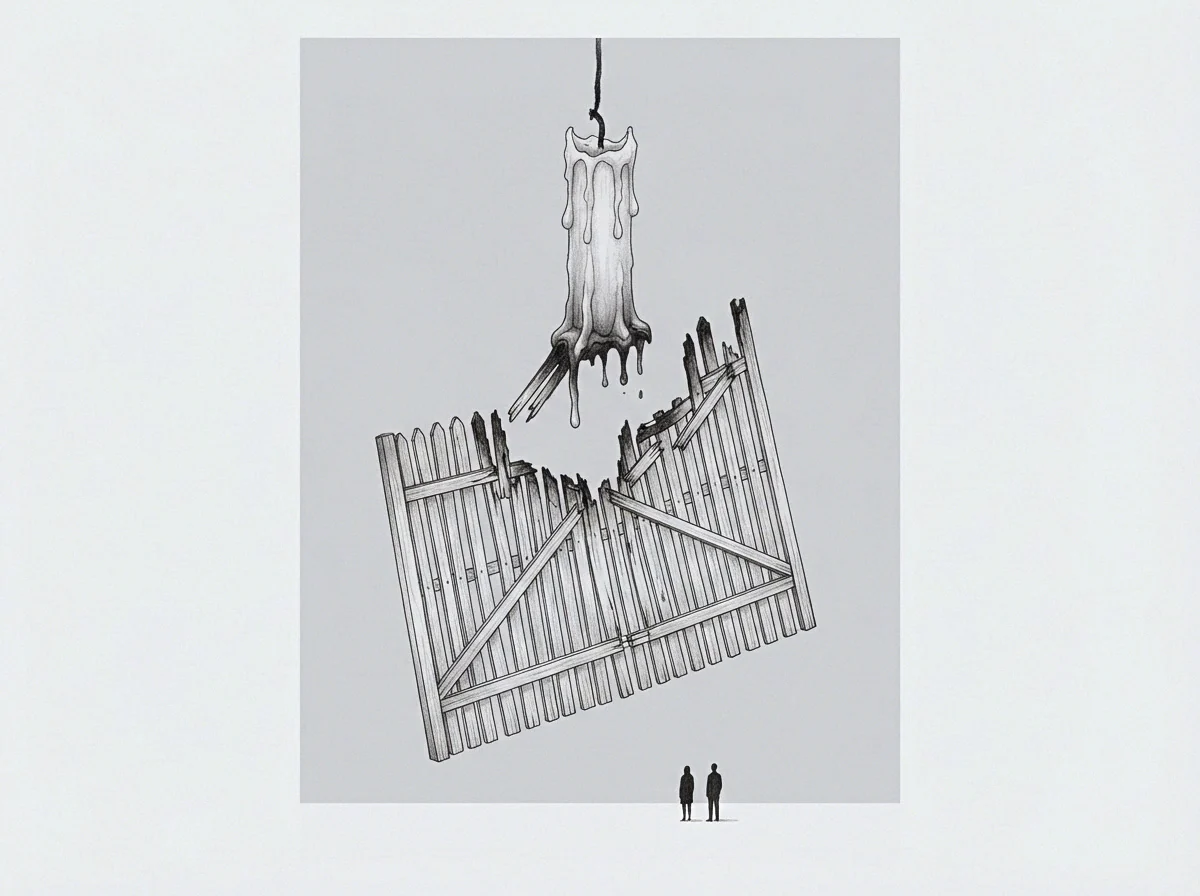
Capital allocation moves beyond enterprise matrix sorting by replacing static taxonomy buckets with continuous mathematical return gradients computed across hurdle baselines.

Bayesian updating recalibrates optimistic domestic priors by blending observed early market signals with objective reference class base rates across defined windows.

Establishing an operational baseline captures a stationary performance benchmark, enabling causal attribution of subsequent strategic shifts.

Allocation decay shows structural yield decline under input perturbation, while background noise displays mean-reverting variance across defined observation windows.

Directional gradient vectors calculate system trajectory and friction by computing partial derivatives across normalized baseline performance metrics.

Operational capacity drains through systemic work routing around friction points where execution costs exceed the setpoint of the core model.

Structural reference class breakdown is resolved by replacing historical distribution models with live rolling calibration windows and ordinal signal tracking.

When cash reserves fall, operational decisions shift from cardinal monetary tracking to reading ordinal gradients across time, capacity, and capability vectors.

Calibration lag measures the persistence of high-frequency belief structures after moving into low-velocity environments with long validation delays.

Signal resolution drops when operators read performance deltas over windows shorter than the systemic lag of the underlying process.

Dynamic observation windows expand time horizons when declining resource inputs bring signal magnitude down to background environmental noise levels.

High convexity capital allocation evaluates tail potential by measuring ordinal cost vectors against unspent latent capacity above a baseline floor.

Live operational signals change dynamically with changing parameter inputs, while cached retrieval returns static output despite altered system state.

Operational delays create feedback latency that distorts market reference set calibration unless baseline windows match execution lag.

Operational restructuring in deflection networks reaches its limit when administrative coordination costs exceed total system capacity.

Reversing an operational avoidance vector yields a mechanical ascent gradient whose magnitude equals the computational cost of the unperformed work.

Discrepancies disappear when strategic directives establish cardinal evaluation baselines rather than ordinal preferences against localized gradient slope calculations.

Quantifying reference class variance in data poor domains demands decomposing novel assets into historical component invariants to establish bounded dispersion models.

Continuous delta metrics separate genuine operational momentum from correlated cascading noise by anchoring rapid telemetry to delayed invariant clearing baselines.

Enterprise software directional redirection requires statistical baselines tracking component decay and endpoint adoption across explicit observation windows.

Balancing incident response speed against structural resilience balances rapid containment velocity against the long term capacity of core system architecture.

Sustained execution stress forces operational systems into low-energy default states, contracting reachable execution options to local historical paths.

Dynamic system sensitivity analysis evaluates how parameter variations propagate through feedback loops to calibrate stable metric thresholds over time windows.

Decay rate vectors measure output degradation across early execution reference classes by comparing live baseline readings against historical performance windows.
The terms are written where they belong. Each field holds three desks, and every entry a desk writes raises the terms it uses, each term given a meaning, a mechanism and the places it appears. The record on these pages stays first person and hand made; the fields grow the nomenclature.