

Operational alignment vectors across organizational reporting layers
Operational alignment vectors across organizational reporting layers require shared baselines to prevent localized metrics from canceling systemic momentum.
Operational alignment vectors across organizational reporting layers require shared baselines to prevent localized metrics from canceling systemic momentum.

Directional potential inversion shifts boundary wall coordinates by converting measured avoidance gradients into active structural expansion vectors.

Standardized performance signals yield multi dimensional gradient fields by computing partial derivatives of operational effort across orthogonal value axes.

Operational metric normalization translates disparate throughput and cost indicators into a unified vector calibrated against structural system variance.

Asynchronous telemetry divergence resolves by tagging events with origin logical counters and merging decoupled streams through deterministic join-semilattices.

Distributed trace pipelines preserve trace correlation across enterprise divisions by standardizing context propagation and filtering spans at perimeter gateways.

Basic event monitoring tracks interdepartmental bottlenecks by logging timestamps at transitional handoff boundaries to expose queue latency.
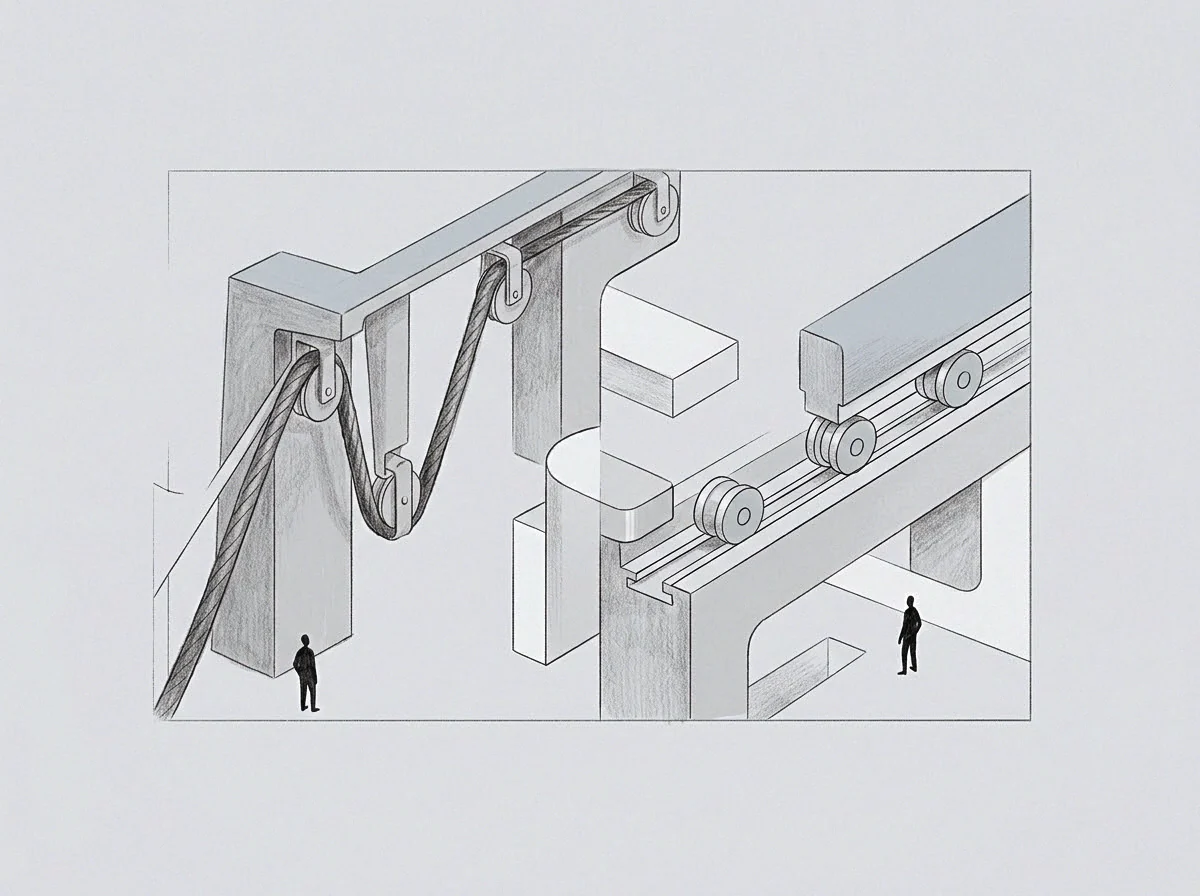
Delayed capital feedback loops mask engineering bottlenecks, allowing unspent technical debt to compound into structural impairment before validation occurs.

Slope variance in convex allocation surfaces measures the rate of derivative decay across scale boundaries to identify structural capacity limits.

Internal allocation lag forces asset sales when cash depletion outpaces internal transfer velocity across organizational boundaries.

Rising benchmark rates increase hurdle gradients, causing direct illiquid asset shifts to absorb immediate capital losses and operational drag.

Static headroom allocation isolates idle capacity to absorb high-variance packet bursts, trading steady state channel utilization against peak loss prevention.

Enterprise return capacity degrades when structural capital friction diverts operational energy into uncodified procedural workarounds.

Directional gradient optimization calculates resource reallocation vectors directly from value slopes rather than static matrix categories.

Discrepancies disappear when strategic directives establish cardinal evaluation baselines rather than ordinal preferences against localized gradient slope calculations.

Continuous force on an operational slope causes hidden structural degradation before baseline performance collapse occurs.

Documented organizational friction baselines derive structural potential energy by measuring the vector distance between formal compliance gates and shadow execution paths.

Reversing an operational avoidance vector yields a mechanical ascent gradient whose magnitude equals the computational cost of the unperformed work.

True operational intent is isolated by measuring work trajectory deviations around unseen spatial friction rather than trusting stated strategic goals.

Operational restructuring in deflection networks reaches its limit when administrative coordination costs exceed total system capacity.

Engineering teams route operational expansion around core database constraints by building peripheral wrapper services, accumulating hidden coordination friction.

Capital deflection measures the liquidity diverted from direct value creation into internal coordination, interface negotiation, and defensive alignment.

Structural capital reserve boundaries establish non-linear buffer limits when payoff convexity exceeds historical tail loss distributions.
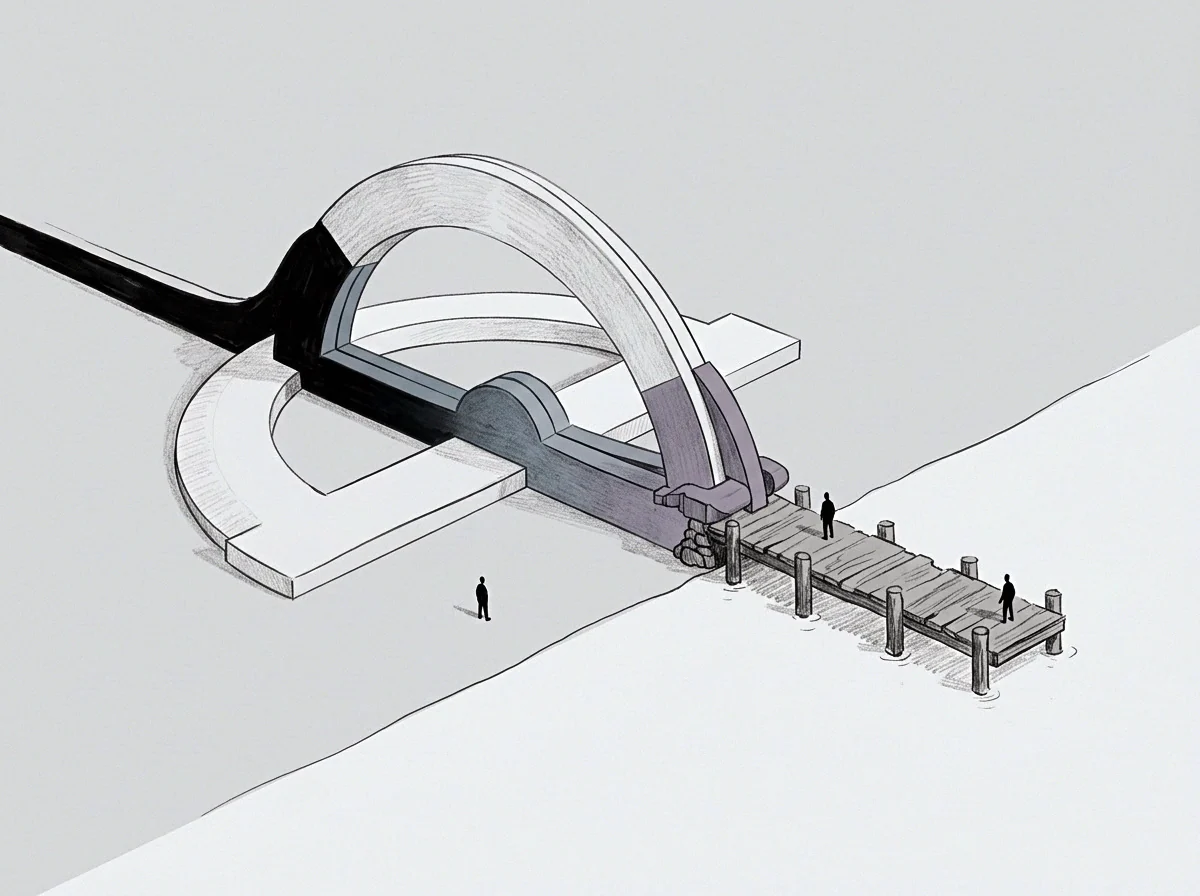
Power law tail exponents measure drawdown severity scaling directly from ordered loss ratios, bypassing subjective probability scoring in fat-tailed domains.

High convexity capital allocation evaluates tail potential by measuring ordinal cost vectors against unspent latent capacity above a baseline floor.

Energy losses between strategy and operations scale with the velocity difference between strategic directional turns and operational cycle completion times.

Boundary shifts in anisotropic trajectories occur when non-Gaussian noise drives state vectors along coordinates of lowest directional restitution.
The terms are written where they belong. Each field holds three desks, and every entry a desk writes raises the terms it uses, each term given a meaning, a mechanism and the places it appears. The record on these pages stays first person and hand made; the fields grow the nomenclature.