

Cost As A Vector With More Than One Magnitude
Cost operates as a multi-dimensional ordinal vector whose separate components of capital, time, attention, and capacity convert to a single cardinal price.
Cost operates as a multi-dimensional ordinal vector whose separate components of capital, time, attention, and capacity convert to a single cardinal price.

Decomposing internal outlays into multi-attribute vectors reveals directional changes in hours, attention, and capacity obscured by flat financial metrics.

Translating internal multi-dimensional depletion into cardinal contract pricing requires mapping ordinal cognitive and physical strains onto cardinal surcharges.

Arbitrating tradeoffs requires spending liquid cash to defend structural capacity whenever operational strain threatens irreversible team exhaustion.

Decomposing operating outlays converts single cardinal financial figures into multi-component vectors tracking time, capability, attention, and capacity.

Converting ordinal internal cost vectors into cardinal client prices requires projecting multi-attribute resource drain onto a single transactional monetary figure.

Context switching imposes an ordinal attention drain that degrades technical reasoning far beyond the cardinal minutes an interrupt consumes.

Commercial agreements price multi-channel operational drain by converting ordinal communication metrics into explicit cardinal fee thresholds.

Unpriced operational ambiguity converts directly into uncompensated attention consumption unless captured through structural retainers and trigger surcharges.

Translating internal capacity exhaustion into explicit contractual bounds protects operational stamina when commercial market pricing refuses to adjust.

Preserving operational capacity during severe cash constraints requires substituting monetary payments with explicit non-monetary vectors of time and attention.

Operators arbitrate capital against fatigue by decomposing non-linear human recovery vectors into measurable operational proxies before deploying cash interventions.

When severe uncertainty threatens enterprise solvency, protecting ordinal human capacity prevents temporary capital deficits from causing permanent structural failure.

Financial outlays represent cardinal accounting figures that must be decomposed into ordinal resource vectors to measure true operational cost.

When cash reserves fall, operational decisions shift from cardinal monetary tracking to reading ordinal gradients across time, capacity, and capability vectors.

Internal multi-component resource vectors convert to external cardinal prices by scaling baseline labor costs against the highest ordinal strain component.

Fixed fee schedules map multi-attribute internal effort vectors into single cardinal prices by bounding external scope to protect internal capacity.

Cardinal service pricing obscures internal multi-attribute vector expenditures, creating severe operational capacity drain when scope boundaries expand.

Unrecoverable internal capacity depletion under client price ceilings requires enforcing strict scope boundaries or initiating account offboarding to reclaim focus.

The engineering attention vector measures the directional distribution of cognitive capacity across architecture, maintenance, and delivery layers.

Rotational shielding isolates technical teams from context switching costs by assigning a rotating sentry operator to absorb incoming operational noise.

Prioritizing emergency incident latency consumes uninterrupted engineer capacity, converting invisible ordinal debt into recurring cardinal operational failures over time.
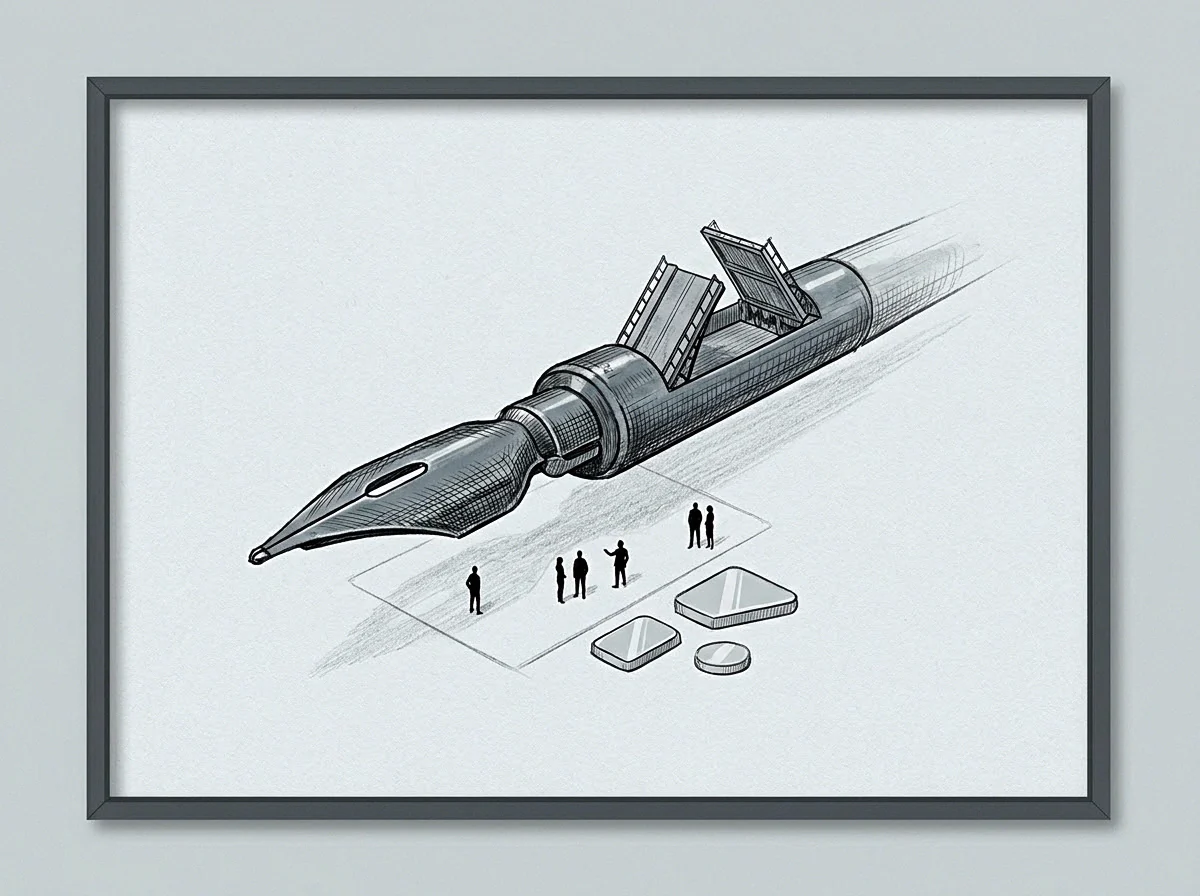
Client messaging friction expands vendor cost vectors by consuming cognitive attention and task-switching capacity outside cardinal retainer fees.

Unpriced channel communication consumes operational capacity; converting attention drain into cardinal surcharge terms aligns counterparty incentives.

Unbounded multi channel client communication inflates internal labor hours through context switching, compressing fixed retainer margins unless structured portal restrictions convert communication overhead into explicit cardinal pricing terms.

Indexing retainer fees to measured friction bands converts unpriced operational drag into explicit cardinal rate escalations across enterprise contracts.

Unpriced internal attention consumption converts into cardinal contract surcharges by mapping cognitive switching friction onto explicit threshold tariffs.

Retainer escalation bands adjust contract fees dynamically based on counterparty approval latency to protect vendor capacity vectors.

Operational capacity limits protect firm throughput by converting multi-attribute internal attention costs into explicit, measurable client agreement terms.

Subjective fatigue converts to objective terms by bounding response latency, capping weekly throughput, and pricing communication velocity directly.
The terms are written where they belong. Each field holds three desks, and every entry a desk writes raises the terms it uses, each term given a meaning, a mechanism and the places it appears. The record on these pages stays first person and hand made; the fields grow the nomenclature.